
A man hears his car alarm begin to sound. It’s the mid-1980s, near the water tower at 20th and Grand, in North City. The man steps outside his duplex and discovers a boy standing there. The boy is Antwane White, who lives across the alley with his mom and granny and siblings. He has knocked on the door before without success, so now he’s trying a different approach: Having learned the man’s work schedule and waited for him to come home, he has activated the car alarm, knowing that the man will need to go to the front of the car to turn it off. How you doin’? the boy asks. I’m busy, the man says.
Years later, White, who is now 48, can remember these specific details of being rejected by his biological father. He cannot access the emotions; perhaps his mind has protected him from those, he says. In any case, the outcome was evident: “I stopped going.”
Get a fresh perspective on today’s top stories
We will never send spam or annoying emails. You can unsubscribe anytime.
Not long after, White’s life descended into difficult times. However, that wasn’t the complete story. His experience demonstrates that although growing up without a father can leave lasting scars, those scars don’t have to define a person’s future.
Fathers are important to St. Louis’s future because the region’s long-term success—perhaps even its sustainability as a place to live and work—will depend on the resilience and determination of today’s young people, and research suggests young people fare better when their fathers participate in raising them. The word “suggests” is deliberately chosen here: Life is complex, and deliberately depriving children of their fathers to conduct a study would be unethical, so much of the current research is more suggestive than conclusive.
Still, according to a recent book co-edited by scholars at the Harvard Kennedy School, a “growing body of evidence” has shown that fathers are significant to kids’ cognitive, psychosocial, educational, and behavioral development—for instance, whether they attend school or participate in dangerous activities. While it’s true that two loving parents of any sex or orientation are better for kids than just one parent, the editors write, “the importance of engaged fatherhood is now undismissable in ways it was not in earlier decades.”
In fact, in Missouri’s state capital, where the two major political parties rarely see eye to eye, this represents an uncommon area of bipartisan agreement.
State Rep. Jamie Ray Gragg of southwest Missouri understood this on January 27, when he presented his case to a committee in the state House of Representatives. His objective: to convince fellow lawmakers to approve, for the second consecutive year, his legislation to establish the Missouri Fatherhood Engagement Project. “It is labeled a ‘father’ bill,” the Republican explained to his colleagues. However, he emphasized, “It’s a kid’s bill.” This distinction is important, he pointed out, because “our children … are our future.” He referenced Whitney Houston. “Not to go into an old ’80s song, but yes.”
Gragg felt encouraged because both Democrats and Republicans seemed interested in his proposal. The aim was to create a state-administered fund to help fathers who have lost contact with their children rebuild those relationships. The fund could receive money from various sources—state or federal funding, charitable contributions—but the purpose would not be to persuade fathers to care about their children. Rather, Gragg sought to support fathers who already want to be involved but face obstacles, whether legal, employment-related, or connected to the foster care system. Gragg envisioned the state’s Division of Social Services distributing grants to community organizations that help fathers overcome these barriers.
Florida has previously created such a program, which has directed funds toward organizations like the faith-based nonprofit Man Up and Go. The director of strategic development for that organization in southwest Missouri, Tim McConville, provides coaching to fathers who have had their children taken by child protective services (or are at risk of this happening) and assists them in attending required meetings, understanding the system, and maintaining hope. McConville spoke to the committee about receiving constant requests. “They’re constantly like, ‘Tim, can you do this? Can you help this dad?’ And I have to limit what I can do because I can’t be in two places at once. And so this bill would allow us to expand and do this work on a larger scale.” He noted that placing a child in foster care costs state residents about $20,000 annually. “If we can prevent that, it helps the kids. It helps everyone.”
Following McConville’s testimony, Rep. Raychel Proudie, a Democrat from Ferguson, offered her support. “It just makes economic sense from every angle,” she remarked. “I support this bill.”
She wasn’t alone in her support. On February 25, when the full House debated Gragg’s proposal, Rep. LaKeySha Bosley of North City stated: “I completely support this bill.” Rep. Marlene Terry of North County agreed. “If you’ve never witnessed or been involved in a situation that requires something like this,” Terry noted, “you probably wouldn’t understand.”
Some fiscally conservative Republicans expressed concerns, seeing the bill as government overreach into personal life. “I’m not entirely sure that I’m comfortable with government trying to shape people into being better,” said Rep. Bryant Wolfin of Ste. Genevieve. But his party members disagreed. One quoted the Republican Party platform section stating, “Republicans support policies that strengthen families.” And at a later hearing in March, another noted that while he believed in limiting state involvement in families, “the reality is that no one’s stepping up, and no one’s volunteering to address this issue.”
Although the House passed the bill without much debate, it stalled in a Senate committee, where lawmakers from both parties voted against it. Nevertheless, despite disagreement about solutions, there was consensus on the issue itself: Fatherlessness is damaging Missouri. Gragg referred to it as “an epidemic.”
Missouri is not unique in this regard. As of 2020, 17 percent of Missouri households with children were led by single mothers—consistent with the national rate. Yet this statewide percentage masks important neighborhood differences. In St. Louis, for instance, there were multiple neighborhoods in North City and North County (and nowhere else) where more than 50 percent of households with kids had only a mother.
The fact that many kids live with single moms doesn’t mean their fathers are not involved in their daily lives. As Richard Reeves explains in his widely-read book Of Boys and Men, “A father doesn’t need to live in the same house to be a good parent. What counts is the bond between them.”
However, when examined broadly, father presence appears to be strongly connected to children’s financial prospects. In the early 2010s, economists working at the Harvard University–based research organization Opportunity Insights obtained anonymous tax information from millions of Americans spanning multiple decades. This allowed them to examine how income changed between generations and varied by region. One of their initial discoveries, described in a 2014 paper, was that communities with fewer single-parent households had greater economic progress for children. The researchers couldn’t determine if having many single parents was causing reduced mobility, only that a connection existed.
They also found that family structure wasn’t the only factor. Their research revealed that “Black and white boys achieve vastly different results even when raised in married families with similar finances, education, and assets, residing in the same neighborhoods, and attending identical schools.” Clearly, father presence by itself had not eliminated the racial disparity.
Yet in certain locations, this racial disparity was considerably less pronounced—and to the researchers, this indicated that “the racial gap in upward economic mobility is driven mainly by changeable environmental conditions.” Drawing on their extensive IRS data and census records, the researchers discovered that Black boys specifically tended to earn more as adults if they’d grown up in areas where three conditions existed: low poverty levels, low racial discrimination from white residents, and a large proportion of Black children living with their fathers. Again, the researchers were cautious about making strong causal arguments regarding how much, if at all, each of these elements directly enhanced Black boys’ income. Perhaps they were treated better, the researchers proposed, or perhaps they benefitted from “guidance by Black male role models in their neighborhoods.”
In any case, “mentoring initiatives for young Black men” was identified by the Opportunity Insights researchers as “show[ing] the most potential for reducing the racial disparity.”
Adult mentoring was something Antwane White lacked—at least initially.
Selling drugs, gang involvement, and street life: All were “just part of everyday life,” White recalls about his childhood in North City. He was arrested in eighth grade for stealing a car and spent time in a juvenile detention facility. This didn’t change his behavior. He says committing robbery made him feel powerful—like he had power over his situation, if only briefly. He wanted to show the neighborhood how dangerous he was; his father’s opinion was irrelevant. “Perhaps I was trying to gain acceptance from others to fill the void left by my absent father,” he reflects.
White’s daughter was born when he was 20, but he missed her first six years: He was incarcerated for robbery starting in 1998 and wasn’t released until 2004. “It wasn’t a simple transition,” he recalls, “but I remained in the same environment.” His son, Antwane Jr., was born in 2008. Not long after, White made a choice he describes as among the worst of his life. While watching his son and his toddler nephew, the nephew had an accident in his clothes. The specifics of what followed were “highly disputed” according to court records, but everyone agrees that to clean the child, White placed him in a bath without testing the water temperature first, resulting in second-degree burns on the child’s legs. White immediately notified the boy’s mother, who rushed him to the hospital; the child required an extended hospital stay. White maintains the injury was unintentional, and the jury couldn’t agree on a first-degree assault charge, which would have required evidence he deliberately harmed his nephew; instead, they found White guilty of second-degree assault, which only required proof of carelessness.
Due to his history of criminal convictions, though, White received a 15-year sentence for this offense. During his incarceration, he participated in gang activities and “occasionally used drugs.” Visits from loved ones devastated him, he recalls, because he couldn’t be present in their lives. “I talked to my son daily,” he remembers. “I kept thinking, Man, I don’t want to come home like this…just lying in my bunk, staring at the ceiling, considering where I’ve ended up.” Around 2015, he decided he needed to improve himself mentally in order to help his kids. He learned about the state’s Transition Center, a transitional facility near the Near North Riverfront area. As his release date approached, he submitted an application and was approved.
The Transition Center offered access to the Fathers & Families Support Center—an organization that would likely receive grants under a Missouri Fatherhood Engagement Project.
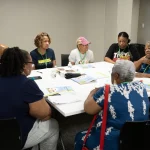
Founded in 1998, the organization initially provided a six-week training program for primarily low-income, non-custodial fathers interested in becoming better men and parents—intense “training programs” emphasizing discipline and personal development. Currently, the organization offers various programs addressing relationships and employment. A participant might need a job coach, help with custody or child support issues, or even transportation to another state to obtain a birth certificate for employment purposes like getting a CDL. The support center handles all of this.
The Transition Center operates a program for returning citizens preparing to reenter society. It reports a re-arrest rate of 7 percent, far lower than the statewide rate of 35 percent. White participated in this program starting in 2019.
Charles Barnes, the program director, describes White’s first day. “I told him, ‘I will keep close watch over you during this entire time.’ And he said, ‘I want that. I need that.’ I said, ‘I will hold you responsible.’ And for the six weeks he was with me, and beyond, he showed the character he was meant to display.”
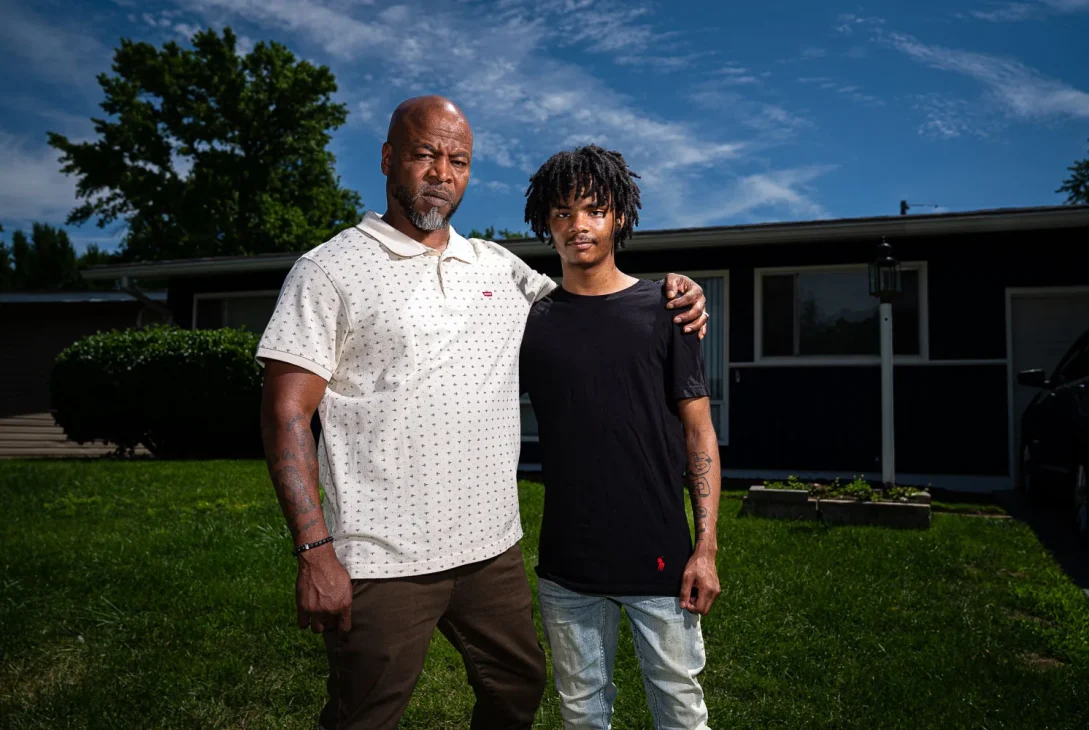
First and foremost, White reconnected with his children. The first time he could spend time away from the center, he surprised his son by appearing at his school parking lot. “I just remember him coming outside and sprinting to me, hugging me as hard as he could,” says Antwane Jr., now 18. “I had really missed him. Honestly.” They ate at Denny’s and got Junior a phone. “He kept saying sorry for not being there for most of my life,” Junior says. “He apologized a lot.” Soon after, White received full custody of his kids.
But he still needed housing. When White found a landlord ready to rent him a place, he requested assistance from the support center. “They told me, ‘We’re here for you. We’ll meet you there at 9:30 tomorrow morning,'” he remembers. “At 9:30, they showed up, wrote a check. I moved in…If you do what you say you’ll do, they will too.”
He got his first job at Blondie’s diner on Washington Avenue, working the grill, then found work at a laundry supplier that provided linens to hospitals—and eventually made that his main job. The reason: There was room for advancement. Delivery people could grow their customer base and earn extra money. So White spent several years growing his customer list, working the drivers’ irregular schedule: Get up at 1 a.m., leave around 2 a.m., finish deliveries by about 10 a.m., then sleep by 6 p.m.
When Diane Santiago, a sales representative, started at the company in 2022, White had earned respect among the other drivers. “They call him ‘The OG’ because he’s been there for years, he’s older than the other drivers, and they admire him because he’s got kind of a quiet authority.”
Santiago’s role included traveling with drivers to help them communicate with clients and encourage additional sales: Who handles your mat cleaning? The drivers seemed unwelcoming and resistant at first. White was an exception. He welcomed her on rides and asked her questions—though he initially kept his personal life private. “He was somewhat reserved,” she recalls. But she observed his kindness—he always greeted people warmly before discussing business. His clothing was always neat. He was methodical, followed rules, and maintained contact, never needing reminders to respond to a customer. He asked her with humor, “Will you help me earn more?”
“We never got shot down
on these streets,” he says.
“Now we’re older and making
good money.”Antwane White
She certainly did. His compensation grew by roughly $35,000 within a year of working together. “My income climbed into a bracket where I can complain about my taxes,” he jokes.
White reports, and Santiago confirms, that he has built up his accounts to earn over $150,000 annually. His brother manages a transport company and earns more, he says. White credits their success to their mother, Mary Ann White, who worked hard and long hours, including on holidays, to raise them along with three other children.
White and his brother occasionally sit together drinking beers, thinking about their impoverished beginnings. “We made it out of these streets alive,” he says. “Now we’re making real money at our age and taking care of our families like we should. I always tell him, ‘If only they knew our background.'”
That’s the message White tries to convey to participants at the Transition Center: It is achievable. He sometimes gets called by Barnes, who puts him on speakerphone with reluctant participants. White discusses his own life changes. “Men coming home might have it hard,” he says, “thinking life won’t improve for them. I want to show them it’s doable…But you won’t succeed unless you’re prepared to put in the effort.” Barnes has also recommended many participants to White. White coaches most through phone conversations; some he works with in person. Similar to Barnes, White doesn’t soften his approach. “I come from the same background as the guys I’m helping,” he explains. “So we’re equals. I’m not going to allow you to disrespect me…When you contact me and say you’re struggling, I’ll pay attention. But if the problem is one you created, I’m going to be honest with you.”
Barnes sometimes witnesses how people respond to him. “They tell me, ‘I finally have someone who actually understands me.’ Sometimes it’s surprising.”
White’s financial success is itself remarkable: According to data from Opportunity Insights, people who grew up in North City during White’s childhood face some of the greatest barriers to financial success in the region. So White represents an exception to typical patterns. The real question is whether a family’s cycle of disadvantage can actually be broken through one man’s determination.
The Opportunity Insights team discovered that for disadvantaged Black children, growing up in a community with many involved Black fathers provided economic advantages, regardless of whether their own father was present. What shaped lifetime financial success, they found, depended less on a child’s personal family situation and more on the neighborhood environment during their formative years.
In that regard, Junior starts with some obstacles: He spent much of his youth in lower-income St. Louis neighborhoods, and currently, he notes, “Most of my buddies live only with their moms…I don’t know anyone who lives with their father.”
However, Junior does live with his father—and his father is working to help him become economically self-sufficient. White recently had a talk with both children—his daughter works as an Amazon driver, his son works at Wendy’s—explaining they need to build emergency savings so that if their cars fail, they can pay for repairs without his help.
White then came up with a concept. He thought about how his company matches his retirement contributions. So he created an offer: If his children opened savings accounts and saved $5 daily, he would match their deposits. He pitched it to them in a text chat. “Be serious about this,” he typed, “and let’s build savings.” His girl replied: “I’m definitely going for it.” Junior sent back a muscle emoji.
Junior wants to mirror his dad’s path—plans to get his CDL eventually, learn truck driving, save funds, and buy property rather than renting. Money is his main focus because his father emphasizes it.
That’s not all, though. On his father’s porch, they sometimes relax together and chat about sports and significant topics. Junior says: “I regret he wasn’t there for most of my childhood. But he’s been great. He’s made up for it.”
If studies eventually demonstrate that fatherlessness harms economic advancement, legislation similar to the proposed Missouri Fatherhood Engagement Project would gain support—providing a way to allocate state funds to organizations like the Fathers & Families Support Center. The nonprofit reports that during 2025, it worked with 267 fathers on obtaining or retaining jobs paying above the minimum wage, and that from 2019–2024, its former participants paid approximately $6 million in child support combined.
Not all participants successfully complete their programs. Approximately 30 percent leave before finishing. “We’re working with real people,” notes chief operations officer Destini Goodwin. Many of them, she says, have unresolved trauma. Reginald Slaughter, the outreach manager, acknowledges that some men avoid dealing with these traumas, but others refuse to follow program guidelines—attending sessions on time, dressing appropriately, or respecting the mothers of their children. Others resist being told that their substance abuse, attitude, or violent behavior toward partners is what’s preventing them from seeing their kids. “Unless you’re accountable and responsible,” Slaughter says, “you won’t be successful here.”
Even for those who do graduate, the journey continues. Consider Caron Perkins, age 26. Sitting in his freshly organized Normandy apartment, he describes being a 19-year-old college football player at Culver-Stockton when he discovered his girlfriend of only three months was expecting twins. “I was emotional when they arrived,” he recalls. “Experiencing their birth and holding them…This was truly one of my best memories. I honestly thank God for them.”
The relationship with the mother deteriorated. She took him to court in 2025, which ordered him to pay child support. However, after a school worker reported concerns to child safety authorities about the mother, state officials started evaluating Perkins’ capacity to parent the twins—and suggested he contact the Fathers & Families Support Center.
He wasn’t enthusiastic. But the first class of the six-week program shifted his thinking. “The instructor—you could tell he’d faced similar situations that we all have. So I thought, maybe he can assist me.” Perkins found particular value in individual therapy sessions. “There were experiences throughout my life that I’d kept hidden,” he says. “They were painful. But now, those experiences don’t control me anymore.” He rejects the shame associated with seeking help. “People may believe, therapy will weaken me…. What matters is your own wellbeing, not others’ judgment.”
Beyond practical guidance on managing conflict and stress, he also got helpful information about job applications and workplace communication. Perkins graduated from the center in May. For now, he works as a personal trainer—balancing his schedule with time with the twins, who are now 6. But through the center, he developed interest in a real estate career—possibly starting a business he could transfer to his kids. “Something,” he says, “I can leave for them.”