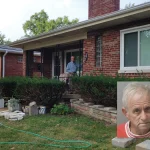

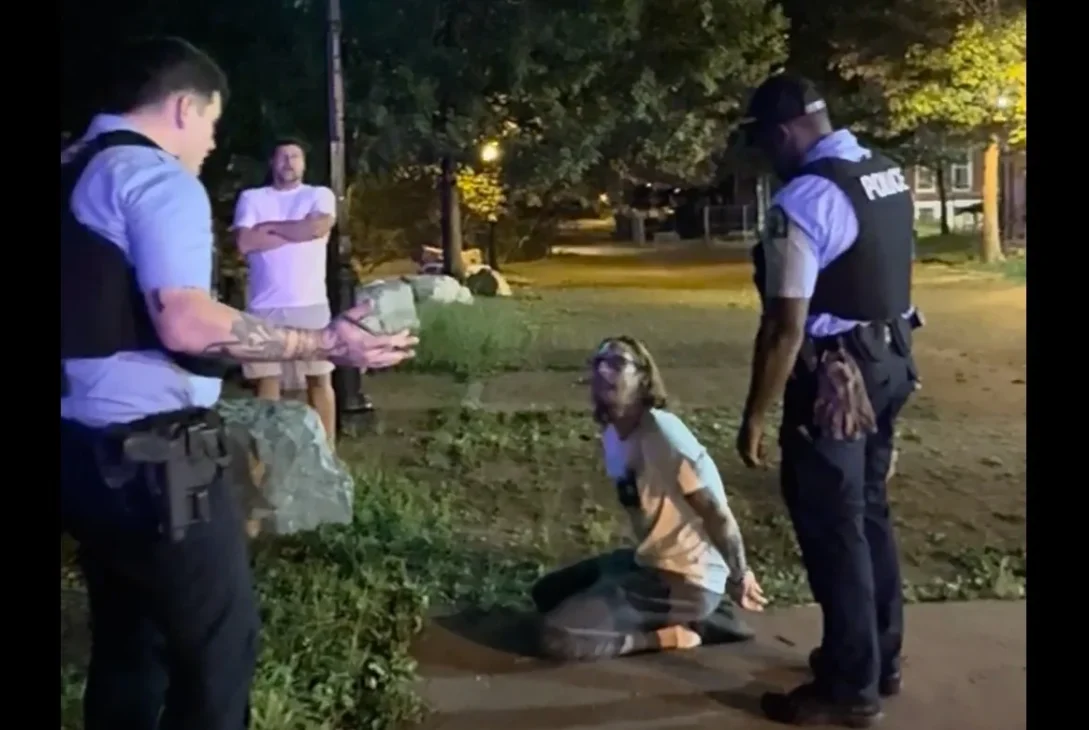
Zach Chasnoff says that over five consecutive nights, he repeatedly contacted police about troublemaking youths in his LaSalle Park neighborhood who were setting off fireworks, igniting a dumpster, and making threats against him and his family. However, when officers finally showed up on Friday night, they arrested Chasnoff instead of addressing the chaos.
Chasnoff and other residents blame the incident on unruly teenagers and inadequate police response. Police officials, conversely, cite the situation as evidence that the St. Louis Metropolitan Police Department needs additional staffing.
Get a fresh take on the day’s top news
We will never send spam or annoying emails. Unsubscribe anytime.
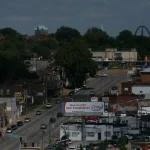
Chasnoff, 48, has called LaSalle Park home for over six years, living in a neighborhood that straddles two distinct worlds. On one side sit elegant brick duplexes and townhomes reminiscent of Lafayette Square, filled with residents who support public media and drive Teslas and Subarus. Just a short walk away stand vinyl-sided public housing projects. Chasnoff’s own residence sits squarely at this intersection. As an urban dweller, he’s grown accustomed to fireworks celebrations that typically stretch from June through September.
“Like most city neighborhoods, our area experiences fireworks from about June through September,” he explains. He had never called police about fireworks until this year. “But this year felt different.”
Starting in early June, residents noticed an uptick in young people on the streets firing unusually large and loud fireworks. “These were commercial-grade explosives—M-80s and other really explosive devices,” Chasnoff says. Nightly, the neighborhood erupted into sounds resembling a warzone, as video evidence from that week confirms. According to neighbor Ben West, the youth weren’t launching fireworks skyward but rather firing them at each other horizontally in what appeared to be escalating fireworks clashes. “Instead of aiming upward, they’re shooting large rocket-style fireworks at ground level toward each other, creating massive explosions,” West explains.
Starting Monday, Chasnoff called police on the non-emergency line without success. When the disruptions continued Tuesday, he called again. This pattern repeated Wednesday and Thursday with no police response. Neighbor Debra Aerne witnessed youth directing fireworks at an apartment belonging to a housing project resident who had complained. “They completely lit up her home,” Aerne recounts.
Police records document a dozen fireworks-related calls from LaSalle Park that week, beginning Wednesday through Saturday, not counting additional calls categorized as general disturbances. Chasnoff notes, “Each night things were getting worse.”
Police spokesman Mitch McCoy explains that the department, like other major police agencies nationwide, prioritizes incoming 911 calls. Officers cannot respond to fireworks complaints when they’re attending to shootings.
“That’s the situation we’re dealing with,” he states. “We’ve consistently emphasized the need for more police officers.”
According to department data, SLMPD responds to “priority one” incidents—such as shootings—in approximately five minutes on average.
Tensions escalated on Friday when the group of approximately 10 youth grew to between 30 and 40, according to Aerne. Smoke from explosive devices filled the pedestrian area at 10th and Hickory, the dividing line between the public housing and residential sections. Residents attempted to persuade the youth to relocate to a less populated block, but they refused to budge. Gunfire rang out, and residents believe the youths used fireworks to conceal gunshot sounds. “The situation became much more violent and chaotic,” Chasnoff recalls. Multiple neighbors, including Chasnoff, phoned police repeatedly.
About an hour into the chaos, two officers in an SUV appeared in the alley near Chasnoff’s house. He flagged them down and pointed them toward the disturbance, warning them, “Someone’s going to get seriously hurt unless this stops.” The officers acknowledged they would investigate.
However, Aerne observed the officers simply drive through with sirens blaring, temporarily scattering the crowd. The moment they left, mayhem resumed. The youths set a dumpster ablaze. According to Chasnoff, a group of teenagers surrounded his wife and threatened to harm him, assault her, break into homes, and steal pets. At this point, Chasnoff retrieved a firearm and displayed it to deter the teens, which worked.
Chasnoff acknowledges being in an extremely agitated state when officers returned about two hours later—five days after his initial non-emergency call. Believing these were the same officers who’d driven away without intervening, Chasnoff immediately confronted them with expletives and frustration.
Neighbors began recording on their phones.
As Chasnoff turned toward his house, someone from the housing section yelled at police to “tase his ass.” An officer drew a taser and ordered Chasnoff to the ground. The taser activated but didn’t discharge. Chasnoff complied and was handcuffed. “Way to go,” Chasnoff muttered.
“I just arrived,” the officer responded. “I don’t know what happened.”
“Exactly—you just showed up.”
The officer mentioned that police only have four people covering a district with 80 calls. “But we’re not doing our job, correct?” he asked. “We’re at the bottom of the chain. What exactly do you expect?”
“Do your job,” Chasnoff replied, noting, “I show up and do mine every day.”
The officer inquired about Chasnoff’s occupation; Chasnoff mentioned owning a painting business. “Could I work for you?” the officer asked. Chasnoff agreed he could. The officer replied, “Thank goodness.” He continued, “You can’t just yell at us like that!” Following some discussion, tensions eased.
Yet police proceeded with paperwork for his detention. As Chasnoff remained handcuffed and officers prepared a citation, a neighbor interjected quietly, “You’re focusing on the wrong person.” Another resident tried to share information about the fireworks situation. “This is the wrong focus—our neighborhood’s been under attack,” one woman said.
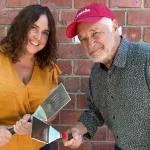
Chasnoff comes from a family of police abolitionists; his father, John, was a prominent activist. Chasnoff himself, however, is known by locals for his collaborative approach with law enforcement and efforts to unite his divided neighborhood. Last year, he and artist Simiya Sudduth created a neighborhood mural using an ARPA for the Arts grant. Chasnoff and his spouse, Amanda, lead the LaSalle Park Neighborhood Association and worked with Purina to install high-definition security cameras. Yet by Friday evening, he had reached his limit.
When police released Chasnoff without arrest that night, residents believed the matter was closed. On Monday, however, officers personally delivered a court summons. Chasnoff faces an August 25 court date. The charge: disturbing the peace.
While neighbors acknowledge Chasnoff should have remained calmer with the officers (though they note police escalated by threatening to use the taser), they’re baffled that police found time to issue a summons while seemingly ignoring five days of explosions, gunfire, and street violence that made their neighborhood nearly uninhabitable.
The St. Louis Housing Authority maintains an annual contract worth roughly $1.2 million with police for on-site patrols in the LaSalle Park development. If the department lacks sufficient officers, it’s not obligated to provide the service and won’t bill for it. Nevertheless, the federally-funded Housing Authority hasn’t sought alternative security despite recent deteriorating conditions.
Residents are pushing the housing authority to enhance neighborhood safety. They also want the downtown curfew imposed by the mayor to expand into their area.
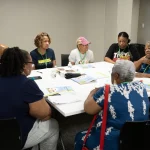
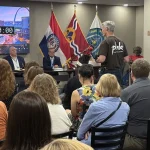
Neighborhood alderwoman Jami Cox Antwi attended a community meeting following Chasnoff’s incident. “The frustration among neighbors was completely justified,” she says. She considers curfew expansion as a real possibility. Children as young as seven roaming unsupervised late at night is unacceptable, she argues. However, she notes that enforcing a curfew relies on police capacity.
LaSalle Park residents value the cross-income friendships their neighborhood has fostered. Both homeowners and public housing residents have suffered from the fireworks violence. They suspect an unlicensed fireworks merchant supplies the explosives via pickup truck to young people and believe their security cameras would capture evidence. They’ve already photographed what they think is the dealer’s vehicle.
Without improved police relations and greater support from city and federal officials, residents are losing hope.
“We’ve invested considerable effort and resources in improving this neighborhood,” Aerne notes. “Nobody wants to leave, but I think some will move after what happened this week.”
Early Sunday morning, less than 24 hours after Chasnoff’s detention, a shooting occurred in the same area. The Purina-funded high-definition cameras recorded images of the suspected shooters dressed entirely in black with masks. Sunday morning footage from additional cameras showed one suspect still wearing the same outfit, casually carrying a gun while walking back through the courtyard toward the housing projects.
According to the police report, officers arrived on Rutger Street—approximately one block from Chasnoff’s residence—around 2 a.m. to find an adult male with non-life-threatening gunshot wounds. He told police he’d heard fireworks and approached the group setting them off. That group then fired actual guns at him.