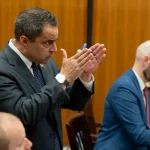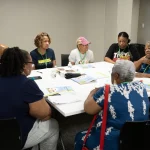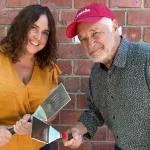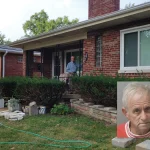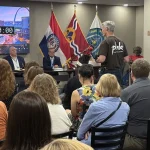

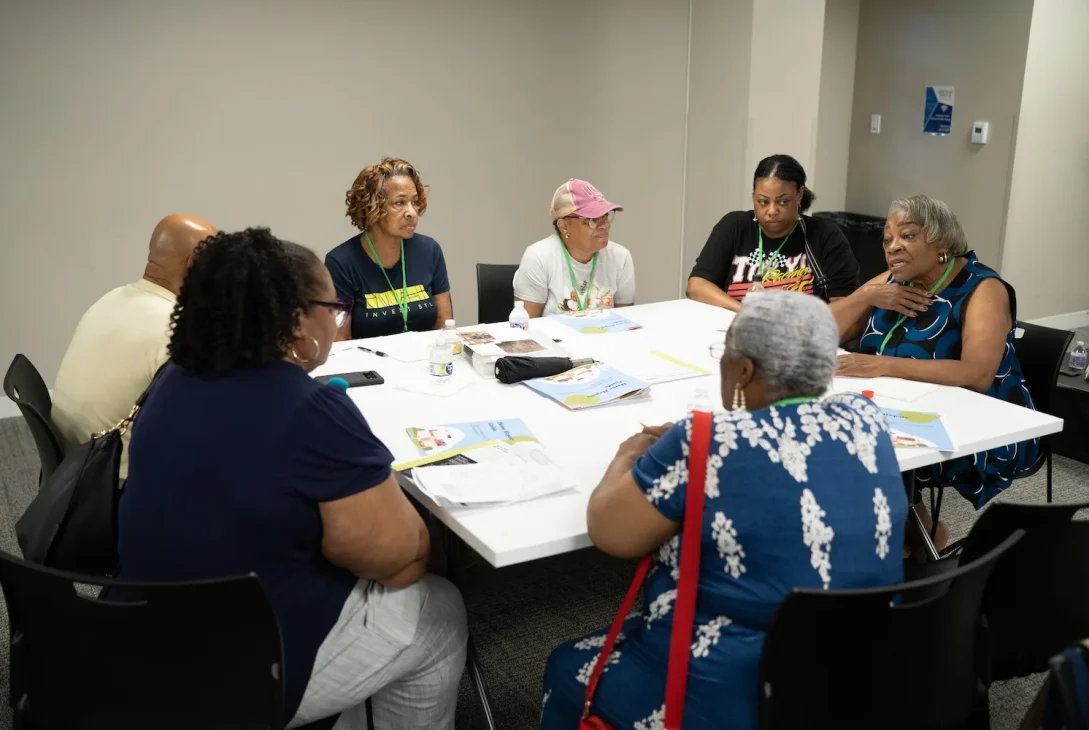
This month, Invest STL celebrated the completion of a three-year initiative with 50 Black residents from the West End and Visitation Park neighborhoods at Delmar Divine. The Rooted: Cultivating Black Wealth in Place program distributed $22,000 to each participant, consisting of $2,000 for immediate use and $20,000 designated for investment purposes.
Michelle Witthaus, Invest STL’s policy design and activation lead and architect of the Rooted program, explained to attendees that significant external investment has been flowing into the West End and Visitation Park—areas located immediately north of Delmar Boulevard between Skinker and Union Boulevards and south of Page Boulevard. She noted that beginning in 2017, outside investors began acquiring properties in the area, often approaching residents about purchasing their homes at substantially reduced prices.
Get a fresh take on the day’s top news
We will never send spam or annoying emails. Unsubscribe anytime.
Witthaus highlighted a striking statistic: a census tract near Delmar Boulevard experienced nearly a 400 percent rise in its white resident population over the past decade. However, data indicates that residents who relocated during this period moved to other properties within or near the neighborhood, demonstrating their commitment to remaining in the area. The question became: how can Black residents who wish to stay in the West End and Visitation Park despite financial obstacles maintain their presence?
Invest STL’s approach prioritizes direct investment in residents rather than focusing solely on neighborhood development. By providing unrestricted funds, the organization believes residents can remain in their homes and avoid displacement as investor interest increases.
Invest STL reports several accomplishments from the program. The cohort established five new businesses and expanded two existing ones, created 24 investment accounts, completed major repairs on 25 homes, and facilitated 16 beneficiary deeds to keep home equity within families.
Cohort members who spoke with SLM expressed overwhelmingly positive feedback about their experience with the investment funds.
Angela Martin, a West End resident for over a decade, established her home health business using the funds shortly after her husband’s death. After winning the lottery selection for program participation, she felt the opportunity was a meaningful gift. Her company, Exquisite Home Healthcare, leverages her two decades of healthcare experience and now employs approximately 20 people. The Rooted funds covered commercial office rent for the next six months, office equipment, and supplies, positioning her business for long-term sustainability.
Though navigating startup requirements proved challenging, Martin credits Invest STL’s support, including a paired financial advisor, with keeping her motivated. She emphasizes that their willingness to take a chance on her drives her forward.
Michelle Wallace, a West End homeowner since 1972, invested her funds into plumbing upgrades for her large home. Winter months present particular plumbing challenges, and heating costs remain high. Though some issues persist, the improvements have made a significant difference. Wallace appreciates the neighborhood’s recent positive changes and the new neighbors she met through the program.
Wallace envisions a future where neighbors maintain their homes, beautify their yards, and support one another. “I would like to see everybody fix things, also, and everybody that’s there to stay there,” she says.
Genet Conyears, selected last for the cohort, used her funds for home repairs. Growing up in the West End, she found the Rooted initiative meaningful as a sign of community investment. She appreciated that the initiative didn’t require residents to hit rock bottom to receive assistance. The straightforward application process impressed her as well. At the event, Conyears displayed before-and-after photos showcasing her home’s new door, repaired front porch, and other improvements.
“Here’s somebody that gave you a whole lump sum … now that’s pretty good, that’s a big story,” Conyears reflects.
Doris House (as she jokes, “like what you live in”) found the funds provided hope. She allocated her investment toward two home improvement projects. Her historic home, dating to the 1904 World’s Fair, is currently undergoing rehabilitation, with plans to return by year’s end. During repairs, she discovered additional issues, including electrical problems, requiring further attention. House particularly valued the access to financial planning professionals and learned valuable lessons about contract navigation.
Beyond the immediate home improvements, House sees broader significance in the program. “I like the idea of being a part of improving the material value of the neighborhood,” she says.
House emphasizes that the program’s deeper impact extends beyond knowledge and assistance. “In a quiet way, it gave residents power,” she concludes. “Knowledge is good, assistance is good, but if the people who receive that don’t feel that they have power, they would just sit on those resources because they don’t feel like they have the power to make it happen.”
Why it Matters: As St. Louis confronts the challenges of disinvestment in predominantly Black neighborhoods north of Delmar, Invest STL’s Rooted program represents an innovative approach to address these issues while strengthening the built environment and supporting current residents.
Invest STL’s philosophy states it “challenges traditional models by recognizing: direct cash investment in people creates a pathway for long-standing neighbors and community staples to continue their legacy in place.”
What’s Next: The Urban Institute, a Washington D.C.-based research organization, will release findings from its study of the Rooted pilot program later this year, providing insights into the program’s effectiveness.
Program participants report experiencing improved prospects for building wealth and securing their families’ futures in neighborhoods where they have deep roots.
At the celebration, Invest STL CEO Dara Eskridge addressed the Rooted cohort: “By my estimation, in this room you all represent more than 500 years of total experience of holding this neighborhood, of pouring love into this neighborhood, of caring for this neighborhood, of stewarding it for the next generation. That’s a feat. We are here because of you, not because of a program, but because you all have cared so long for this place, because you have said: This place matters, despite what the rest of the world may think of it. You said: This is a place worth holding on to, worth continuing to love, worth continuing to invest in, worth continuing to raise your children in. And then to pass the asset on to the next generation, that is something truly special.”